
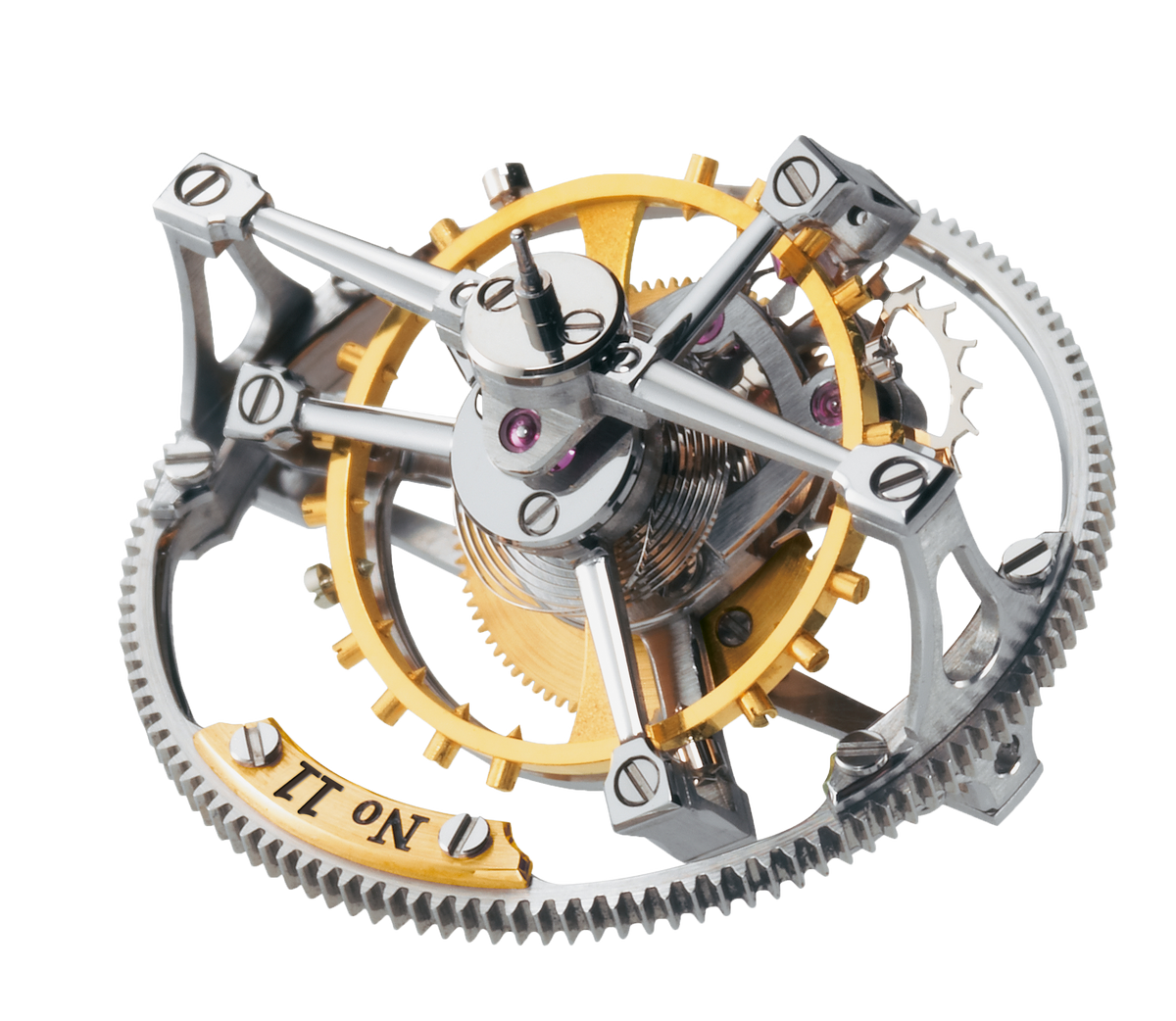
A tourbillon is a mechanical watch complication in which the escapement and regulating organ are mounted inside a rotating cage. The movement of the cage continually changes their position, creating one of the most recognisable displays in mechanical watchmaking.
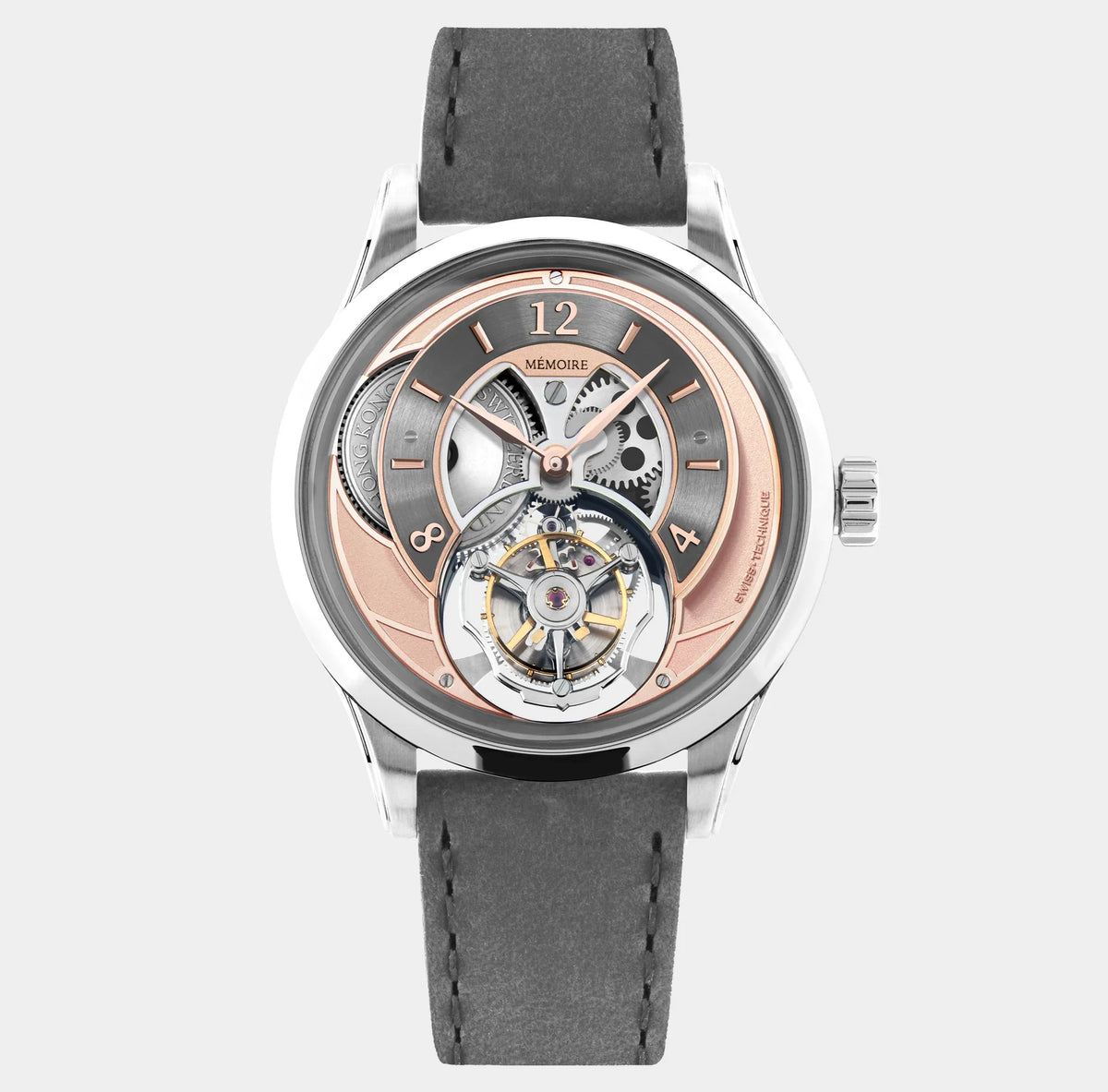
For collectors, the attraction today is as much about mechanical architecture, craftsmanship and visual theatre as it is about the tourbillon’s original purpose. If you want to see how different watchmakers interpret the complication, explore our tourbillon watches.
For a more personal look at the fascination and history behind the complication, read our original 2019 feature Tourbillon, the Pinnacle of Watchmaking.
What makes a real tourbillon?
A visible balance wheel does not automatically mean that a watch has a tourbillon. An open-heart watch exposes the balance wheel and parts of the movement, but those components remain in a fixed position.
In a true tourbillon, the balance and escapement are carried inside a cage that rotates around an axis. Many tourbillons complete one revolution per minute, although other configurations and rotation periods also exist. This rotating cage is the defining feature that separates a tourbillon from a conventional open-heart display.
Why was the tourbillon invented?
The tourbillon is associated with Abraham-Louis Breguet, one of the most influential figures in mechanical watchmaking. The concept dates from the 1790s, and Breguet was granted a patent for the tourbillon regulator in 1801.
At the time, pocket watches spent long periods in relatively stable vertical positions. Gravity could therefore influence the rate of the regulating organ differently depending on the watch’s position. Breguet’s solution was to place the escapement and balance inside a mobile cage so that positional rate variations would be distributed over the course of the cage’s rotation rather than concentrated in one orientation.
How does a tourbillon work?
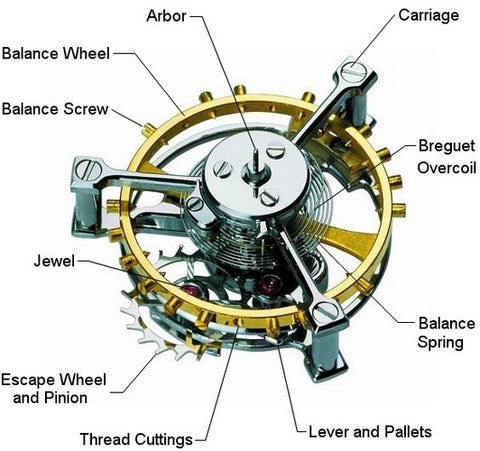
In a conventional mechanical movement, the regulating organ and escapement operate in fixed positions within the movement. In a tourbillon, these components are carried by a rotating cage. As the cage turns, their orientation relative to gravity continuously changes.
The concept is mechanically simple to describe but demanding to execute. The tourbillon cage must be light, precisely balanced and assembled to extremely fine tolerances while also carrying components that are essential to the watch’s timekeeping.
Does a tourbillon still improve accuracy?
The original tourbillon was developed for pocket watches and the positional challenges they faced. A modern wristwatch naturally changes orientation much more frequently during normal wear, and advances in materials, movement design and regulation have made excellent accuracy possible without a tourbillon.
That does not make the complication irrelevant. A well-executed tourbillon remains a demonstration of movement design, precision manufacturing, assembly and finishing. In many contemporary watches, its appeal lies in watching the mechanism operate and in the engineering required to make a rotating regulating system reliable.
Flying tourbillon vs. multi-axis tourbillon
In 1920, master watchmaker Alfred Helwig and students at the German Watchmaking School in Glashütte developed the flying tourbillon. Instead of being supported by bridges on both sides, the rotating construction is cantilevered and mounted from one side. Removing the upper bridge gives a clearer, more open view of the mechanism.
A flying tourbillon should not be confused with a multi-axis tourbillon. A conventional or flying tourbillon typically rotates around one axis. Multi-axis designs rotate around two or more axes, creating a different and considerably more complex mechanical architecture.
Other interpretations include double tourbillons, inclined tourbillons and multiple-cage constructions. These designs show how far the original principle has evolved beyond Breguet’s pocket-watch regulator.
What should you look for in a tourbillon watch?
A tourbillon alone does not determine the quality or value of a watch. When comparing models, consider the movement architecture, finishing, case and dial execution, power reserve, serviceability, warranty and the overall design of the watch. The complication should make sense as part of the complete timepiece rather than simply being present as a specification.
For a first tourbillon, visual clarity and a design you will enjoy wearing are often more meaningful than maximum complexity. More experienced collectors may focus on movement construction, finishing techniques, unusual cage designs or limited production.
The enduring fascination of the tourbillon comes from seeing a critical part of the mechanical movement in constant motion. More than two centuries after Breguet’s patent, it remains one of watchmaking’s most distinctive ways of combining engineering with visual craftsmanship.
Explore our current selection of tourbillon watches to compare traditional, skeleton, artistic and contemporary interpretations of the complication.
Continue exploring tourbillons
Go deeper with our guides to the different types of tourbillons, the differences between a flying and traditional tourbillon, and our practical collector’s guide to choosing a tourbillon watch.

Leave a comment
All comments are moderated before being published.
This site is protected by hCaptcha and the hCaptcha Privacy Policy and Terms of Service apply.