
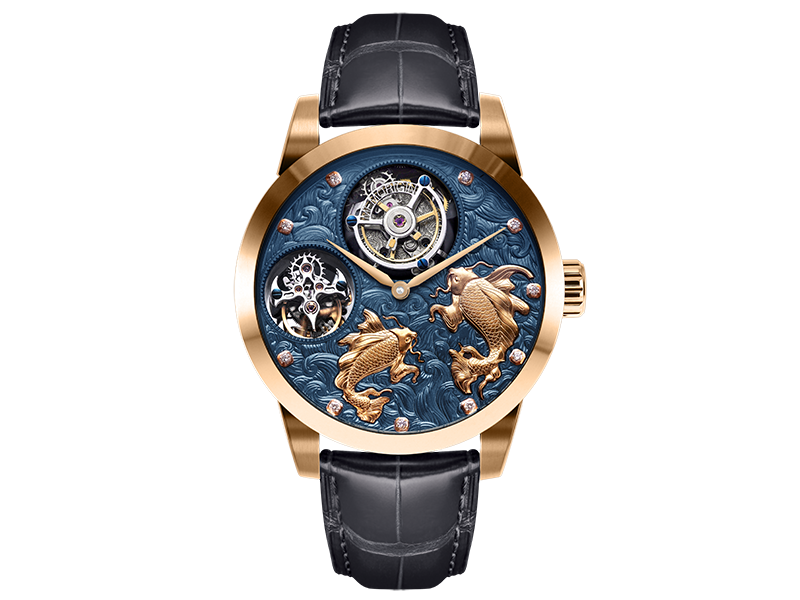
The tourbillon has evolved far beyond the architecture patented by Abraham-Louis Breguet in 1801. The central idea remains familiar: the regulating organ and escapement are placed in a rotating cage so that positional errors are averaged over time. But the way watchmakers support, orient and multiply that rotating assembly can vary dramatically.
If you are new to the complication, start with our guide What Is a Tourbillon? How It Works and Why It Matters. Here, we focus on the major tourbillon constructions you are likely to encounter when comparing watches.
Traditional or classical tourbillon
A traditional tourbillon uses a rotating cage that carries the balance, escapement and associated components. In a conventional construction, the tourbillon cage is supported by bearings at both sides, with an upper bridge visible above the cage and another support beneath it.
This architecture is closest in spirit to the early tourbillon concept and remains a demanding form of watchmaking. The visible bridge can also become an important design element: depending on the watch, it may be highly polished, hand-finished or shaped to complement the movement.
Traditional does not mean simple. Cage weight, balance geometry, gearing, lubrication, adjustment and finishing all influence how successfully the mechanism performs.
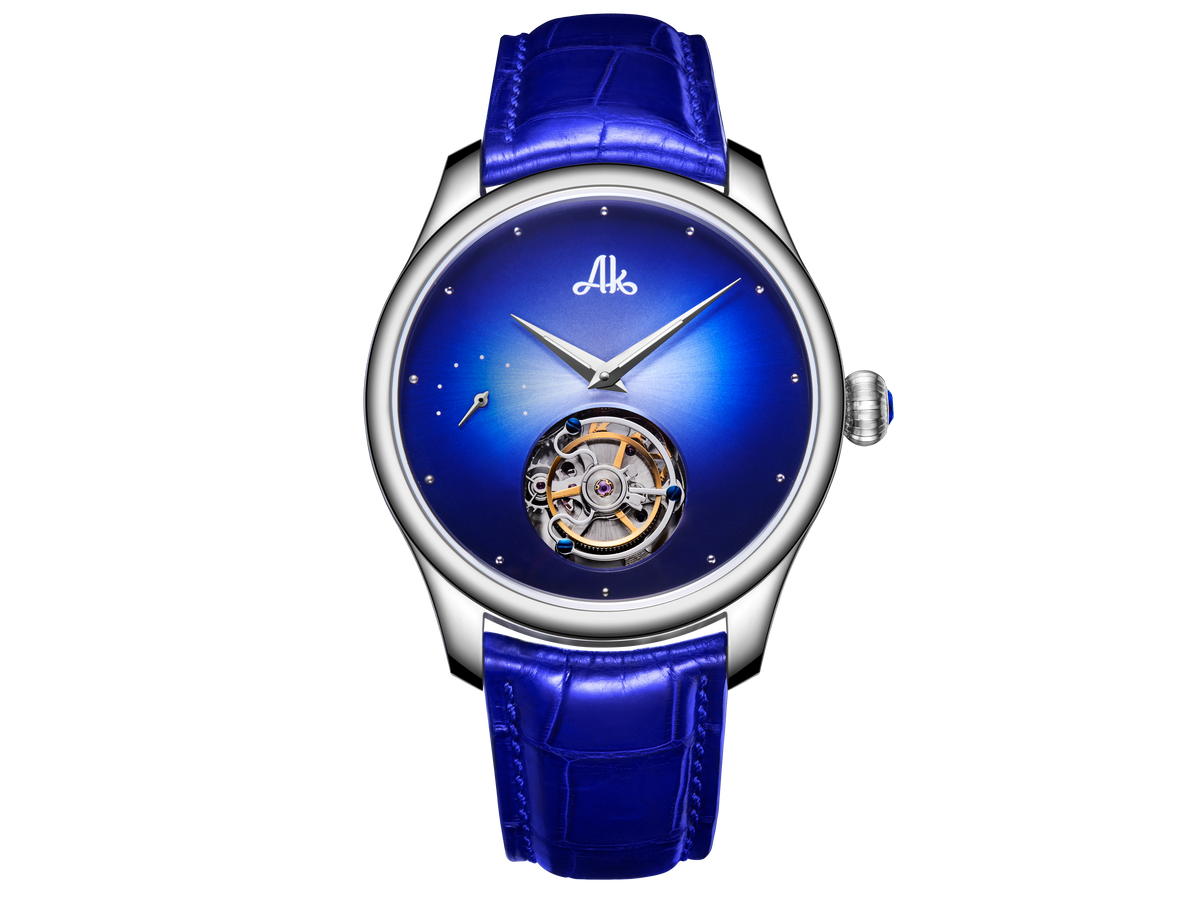
Flying tourbillon
A flying tourbillon removes the upper supporting bridge. Instead, the rotating cage is supported from one side, normally from below. Alfred Helwig and his students in Glashütte developed this one-sided construction in 1920.
The result is a more open visual presentation. With no bridge crossing the top of the cage, the tourbillon can appear to float above the dial or movement. This makes the flying tourbillon especially attractive in openworked and contemporary designs.
Importantly, flying does not mean multi-axis. The term describes how the cage is supported, not how many axes it rotates around. A flying tourbillon may still rotate around a single axis.
For a closer comparison, read Flying Tourbillon vs Traditional Tourbillon: What’s the Difference?.
Multi-axis tourbillon
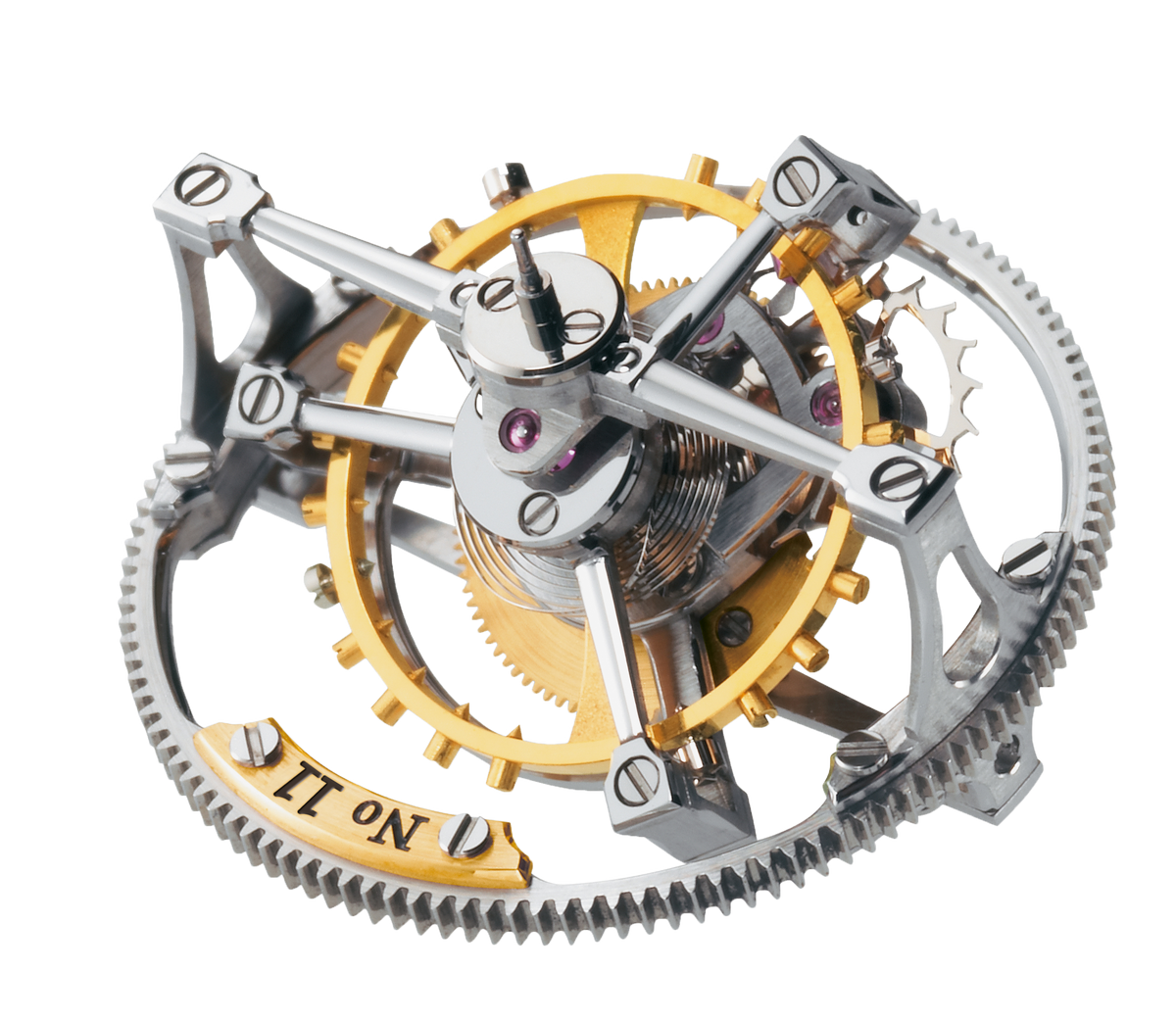
A multi-axis tourbillon adds another dimension to the rotating regulator. Instead of rotating only around one axis, the mechanism moves around two or more axes, changing the orientation of the balance in a more complex sequence.
This approach is particularly relevant to wristwatches, which constantly change position during wear. Multi-axis constructions are among the most visually dramatic and mechanically ambitious tourbillons, but they also introduce additional parts, energy requirements and adjustment challenges.
Terms such as double-axis, bi-axial, triple-axis and spherical tourbillon describe different implementations. They should not be confused with a dual or double tourbillon, which usually refers to two separate tourbillon regulators.
Dual or double tourbillon
A dual tourbillon places two tourbillon regulators within the same watch. How the two regulators interact depends on the movement. Some constructions use differential systems to combine their rates, while others use separate regulating systems as part of a broader movement architecture.
The visual effect can be spectacular, but the important point is that two tourbillons and two axes are not the same thing. A watch can have two single-axis tourbillons, one multi-axis tourbillon, or other combinations entirely.
The Memorigin Dual Tourbillon Pisces and Pearls is an example of a watch that makes two rotating regulators a central part of its design.
Inclined tourbillon
An inclined tourbillon positions the tourbillon cage at an angle rather than parallel to the movement. The intention is to vary the balance orientation more effectively during normal wear and to reduce the amount of time the regulating organ spends in less favourable positions.
An inclined cage can be combined with other ideas, so the term describes orientation rather than an entirely separate family of mechanism.
One-minute tourbillon and other rotation periods
The classic Breguet tourbillon completed one rotation per minute, and 60-second tourbillons remain common. The rotating cage can therefore serve as a seconds indication when it carries a pointer or visual marker.
Not every tourbillon rotates once per minute, however. Watchmakers may choose faster or slower rotation periods depending on the movement architecture. Rotation speed is therefore another specification to consider, but it does not tell you whether a tourbillon is traditional, flying or multi-axis.
Tourbillon versus carrousel
The tourbillon is sometimes confused with the carrousel because both place the regulating organ in a rotating assembly. Their power transmission and mechanical architecture differ, however, and they are distinct horological systems. A rotating balance on the dial is not enough on its own to identify a mechanism as a tourbillon.
Which type of tourbillon is best?
There is no single hierarchy that makes one architecture universally better. A flying tourbillon may offer a more unobstructed view. A multi-axis mechanism may appeal to collectors fascinated by mechanical motion. A traditional tourbillon may showcase classical movement construction and finishing. A dual tourbillon can place symmetry and mechanical theatre at the centre of the design.
What matters most is the execution: movement design, finishing, adjustment, reliability, service support and how the entire watch works as a coherent object.
If you are considering buying one, our How to Choose a Tourbillon Watch: A Collector’s Guide covers the practical questions to ask before making a decision.
Explore tourbillon watches
Tourbillons range from restrained classical designs to skeletonized, artistic and technically experimental pieces. Explore our tourbillon watches to compare different interpretations of the complication.

Leave a comment
All comments are moderated before being published.
This site is protected by hCaptcha and the hCaptcha Privacy Policy and Terms of Service apply.